

Master Horse Racing Photography | Zypix
Capture the thunderous excitement of horse racing! Expert guide to horse racing photography for events, sports, and real estate. Dubai tips inside.
Table of Contents
The Thrill of the Track: Mastering Horse Racing Photography for Events, Sports & Real Estate
The ground trembles. The crowd roars. Twelve thousand pounds of muscle, heart, and raw power explode from the starting gate. For the next two minutes, time stands still.
I still remember my first horse racing photography assignment at Meydan Racecourse in Dubai. I was nervous, under-equipped, and completely unprepared for the speed. My first few shots were blurry messes—horses reduced to colorful smears on my memory card. But then something clicked. I stopped fighting the chaos and started anticipating it.
That is the secret of horse racing photography. It is not about pointing a camera at fast-moving animals. It is about feeling the rhythm of the track, predicting the decisive moment, and freezing a story that lasts one second but lives forever.
Whether you are a budding photographer, an events coordinator looking to cover race days, a sports journalist, or even a real estate developer shooting equestrian properties, this guide will transform how you approach the track.
Why Horse Racing Photography Stands Apart
Most photography genres give you time. Wedding portraits allow you to adjust lighting. Real estate photography lets you walk through rooms. Landscape photography offers hours of golden light.
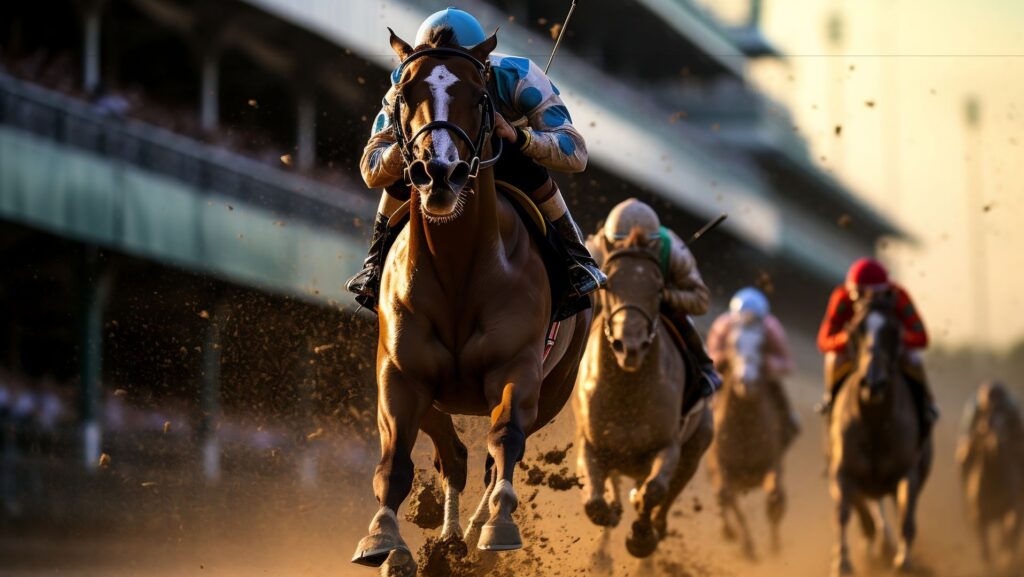
Horse racing photography gives you less than 120 seconds per race. The window for the perfect shot is often a fraction of a second—the moment a horse’s hooves all leave the ground, the instant the jockey’s whip cracks forward, the split second when two noses cross the finish line.
According to the Jockey Club, over 35,000 thoroughbred foals are registered annually in North America alone, each representing a potential racing career. Every single one will have a story worth capturing. But capturing it requires more than luck.
The Emotional Core of the Sport
Beyond the technical challenge lies something deeper. I have photographed horses after winning the Dubai World Cup—their flanks heaving, eyes wild with adrenaline, jockeys crying tears of joy into their manes. I have also photographed horses being walked off the track after a loss, heads low, riders consoling them with whispered words.
Horse racing photography is events photography at its most raw. It is sports photography at its most unpredictable. And sometimes, for real estate developers building luxury equestrian communities, it is commercial art that sells million-dollar dreams.
Essential Gear for the Track: What You Actually Need
Let us be honest. Gear forums will tell you to buy the most expensive 400mm lens on the market. Real track photographers will tell you something different.
Here is what actually matters for horse racing photography:
| Gear Category | Recommended | Why It Matters |
|---|---|---|
| Camera Body | DSLR or Mirrorless with 10+ fps burst | Horses move fast. You need continuous shooting to catch the decisive moment. |
| Primary Lens | 70-200mm f/2.8 or 100-400mm | Versatile range for grandstand shots (70mm) to finish line close-ups (400mm). |
| Secondary Lens | 24-70mm f/2.8 | For paddock shots, jockey portraits, and atmosphere. |
| Support | Sturdy monopod (not a tripod) | Tripods are banned at most tracks. Monopods give stability without slowing you down. |
| Memory Cards | Two 128GB UHS-II cards | You will shoot thousands of frames. Card failure is not an option. |
Personal Gear Advice from the Track
I learned this the hard way: bring rain protection even in Dubai. The one time I left my camera cover at home, an unexpected desert thunderstorm turned the track into a river. My camera survived, but I aged five years in ten minutes.
Also, pack extra batteries. Cold mornings at the track drain power faster than you expect. In Dubai’s summer heat, batteries overheat and shut down. Rotate them in your pocket to keep them cool.
Mastering the Three Key Moments of Any Race
Great horse racing photography is not random. It follows predictable rhythms. Master these three phases, and you will capture the heart of any race.
The Starting Gate: Tension Personified
Horses load into the gate one by one. Some stand calmly. Others toss their heads, foam flying from their bits. A few panic—rear up, refuse to enter.
This is pure events photography. The emotion is human and equine together.
Pro Technique: Focus on the eyes. A horse’s eye before a race tells you everything—fear, excitement, exhaustion, pride. Shoot in aperture priority (f/4 to f/5.6) to isolate the horse against the blurred background of the gate.
The Turn: Where Races Are Won
Mid-race is pure sports photography. Horses are striding fully, jockeys are pushing, and the dynamics change constantly.
Pro Technique: Pan with the horses. Set your shutter speed to 1/500th or 1/1000th of a second. Move your body smoothly—follow through even after pressing the shutter. The background will blur (that beautiful motion blur), but the horse will remain sharp.
For a creative twist, drop your shutter speed to 1/125th or 1/250th. Your keeper rate will plummet, but when you nail it, the image will feel like speed itself.
The Finish Line: History Frozen
The photo finish is iconic for a reason. Two horses, noses extended, bodies stretched, jockeys whipping—all deciding who wins by an inch.
Pro Technique: Pre-focus on the finish line pole. Switch to manual focus so the camera does not hunt at the critical moment. Shoot in high-speed burst mode from the moment the horses enter the final 200 meters until they pass the line.
Beyond the Race: What Most Photographers Miss
The race itself is only half the story. The real gold in horse racing photography lies before and after.
The Paddock: Character Studies
Thirty minutes before post time, horses circle the paddock. Owners in tailored suits clutch lucky charms. Trainers give final instructions. Grooms adjust saddle cloths.
These are intimate events moments. Use a 70-200mm lens. Stand back. Let the scene unfold naturally. Nobody should feel your camera.
The Walk Back: Raw Emotion
After the race, winners celebrate. Losers trudge back. But every horse—win or lose—returns to the stable with its groom.
Some of the most powerful horse racing photography I have ever seen was shot in the walking ring after a grueling race. A horse blowing hard, nostrils flared. A groom whispering “good boy” into a lathered neck. A jockey slumped, defeated, unable to look up.
These images do not need speed. They need patience and respect.
Horse Racing Photography for Real Estate: The Unlikely Connection
You might wonder what horse racing photography has to do with real estate. In Dubai and other equestrian-focused markets, the connection is everything.
Developers building luxury communities around Equestrian Clubs—like Dubai Equestrian Club or Al Jiyad Stables—need more than standard property photos. They need images that sell a lifestyle.
A potential buyer looking at a real estate listing for a villa in Arabian Ranches or Meydan is not just buying square footage. They are buying the dream of watching racehorses train at dawn from their balcony. They are buying proximity to the track.
Professional horse racing photography transforms a real estate brochure from a list of rooms into a story. The horse on the cover is not just an animal. It is an invitation.
Working with Jockeys, Trainers, and Owners
Horse racing photography is 50% camera skills and 50% people skills.
Building Trust
Jockeys are some of the most superstitious athletes in the world. Many will not speak to you before a race. Respect that. Do not force conversation. A simple nod is enough.
Trainers, on the other hand, love talking about their horses. Ask them: “What is this horse’s personality? Does he have any quirks?” The answers will tell you when to shoot. A horse that drops his head before the gate might be tired. A horse that pins his ears back might be angry—and angry horses run fast.
Permission and Access
Most racecourses require media credentials for track-level access. Contact the media office at least two weeks before the event. Some smaller meets are more flexible, but always ask first.
In Dubai, Meydan Racecourse has strict protocols. Apply through their media accreditation system. Never jump a rail or enter restricted areas. Not only is it dangerous, but it also reflects poorly on all photographers.
Editing Your Horse Racing Images: Less Is More
You shot 3,000 frames. Now what?
Cull Ruthlessly
Delete 80% of what you shot. The slightly soft images. The one where the horse blinked. The three identical frames in a row. Keep only the exceptional.
Edit Naturally
Do not over-process horse racing photography. These are sports images. They should look real. Boost contrast slightly. Raise shadows to show detail in dark coats. Increase clarity for texture on muscle and dust.
Crop for Impact
Most race photos benefit from aggressive cropping. Remove distracting backgrounds. Focus on the connection between horse and jockey. A tight crop on two noses at the finish line tells a better story than a wide shot ever could.
Common Mistakes in Horse Racing Photography (And How to Avoid Them)
| Mistake | Why It Happens | The Fix |
|---|---|---|
| Blurry images | Shutter speed too slow | Minimum 1/1000th for action, 1/500th for panning |
| Wrong focus point | Camera focuses on background | Use single-point AF, track the horse’s eye |
| Cut-off legs/heads | Framing too tight in the moment | Zoom out slightly, give yourself cropping room |
| Missed expressions | Watching the horse, not the jockey’s face | Watch both. The jockey’s expression often tells more |
| Over-editing | Trying to “save” mediocre shots | Accept that some races just don’t deliver great images |
The Ethical Side of Horse Racing Photography
This section matters. As photographers, we have a responsibility.
Horse racing photography can romanticize the sport. It can also expose its darker moments. I have photographed horses breaking down on the track. I have seen the fear in their eyes before a veterinary exam.
When you shoot, do not look away from hard truths. But also do not sensationalize suffering. Your job is to document honestly, with compassion for both horse and human.
If you photograph an injured horse, ask permission before sharing the image publicly. Some owners want awareness raised. Others want privacy in pain. Respect both.
Also consider shooting retired racehorses in their second careers—as show jumpers, trail horses, or simply beloved pets. These images celebrate the lives beyond the track.
Conclusion: Finding Your Rhythm at the Rail
Horse racing photography is not easy. It will humble you. Your first race will produce mostly garbage. Your tenth race will produce mostly garbage with a few gems. Your hundredth race will finally feel like a conversation with the sport rather than a fight against it.
But when you nail it—when you freeze that exact moment when horse and jockey become one creature flying toward the finish line—there is nothing else like it.
Whether you are covering a major events day at Meydan, shooting sports action for a publication, or capturing equestrian real estate for a luxury development, remember this: the best horse racing photography is not about the gear or the settings. It is about falling in love with the rhythm of the track, one race at a time.
Call to Action (CTA)
Ready to capture the thrill of the track?
At Zypix Photography, we specialize in high-speed sports photography, elegant events coverage, and stunning real estate visuals across Dubai. Whether you need a photographer for the next horse racing meet or want to discuss a creative project, we would love to hear from you.
Book your free consultation today. Let us create something unforgettable together.